Posted on

Healthcare CRM Solutions: Maximising Potential with Training

The healthcare sector is undergoing a rapid transformation, making robust communication and management systems indispensable. Healthcare CRM (Customer Relationship Management) solutions have emerged as essential tools in this evolution, enabling healthcare organisations to optimise their operations, elevate patient care, and dramatically enhance overall efficiency. The successful implementation and effective utilisation of these CRM systems are heavily dependent on thorough and effective training. This article investigates the critical importance of training in unlocking the full potential of healthcare CRM solutions and outlines various training strategies and best practices that can assist in this endeavour.

Exploring the Crucial Role of Healthcare CRM Solutions in Modern Healthcare

To appreciate the essential role of training in the effective implementation of healthcare CRM solutions, it is vital to understand the significance of these tools within the healthcare industry. Healthcare CRM solutions are sophisticated, technology-driven platforms crafted to manage interactions with patients, enhance patient engagement, streamline daily operations, and elevate the quality of care delivery. These platforms centralise critical patient data, foster effective communication, and automate numerous administrative tasks, allowing healthcare providers to concentrate on delivering outstanding care and improving the patient experience.

The advantages of deploying healthcare CRM solutions are extensive and encompass:

  1. Enhanced Patient Engagement: CRM solutions empower patients by granting access to their health information, facilitating appointment scheduling, and enabling personalised communication. This engagement significantly boosts patient satisfaction, ultimately leading to improved healthcare outcomes.

  2. Streamlined Communication: These CRM platforms foster seamless interaction among healthcare providers, patients, and other key stakeholders. By providing a centralised platform for collaboration, they enhance coordination and communication, which are essential for delivering exceptional patient care.

  3. Optimised Operational Processes: CRM solutions automate administrative tasks such as appointment scheduling, billing, and workflow management, thereby improving operational efficiency and reducing the administrative burden on healthcare professionals. This transition enables practitioners to devote more time to direct patient care, enhancing overall service quality.

  4. Informed Decision-Making Through Data Analysis: By analysing patient data, healthcare CRM solutions provide valuable insights and analytics. This functionality allows healthcare organisations to make informed decisions and deliver personalised care, improving patient outcomes and satisfaction.

Maximising the Potential of Healthcare CRM Solutions Through Comprehensive Training

Diverse healthcare professionals using CRM software on devices during a training session to improve patient care and efficiency.

While the adoption of healthcare CRM solutions is crucial, their effective implementation and usage hinge on thorough training. Here are key reasons why training is essential for unlocking the full potential of these CRM solutions:

1. Ensuring Proficiency in the CRM System

A primary goal of training is to ensure that healthcare professionals become adept at using the CRM system. Training sessions should encompass all functionalities, features, and workflows of the CRM platform, familiarising users with its extensive capabilities. Such familiarity empowers healthcare professionals to fully leverage the CRM solution, ensuring efficient use and maximising benefits for both patients and the organisation.

Hands-on exercises and simulations should be integral to the training process, providing a practical learning experience. By actively engaging with the CRM system, healthcare professionals can build confidence in their ability to perform various tasks, such as accessing patient information, scheduling appointments, and managing communications effectively.

2. Boosting User Adoption Rates

Training programmes significantly influence user adoption rates. When healthcare professionals comprehend the benefits and value of the CRM solution, they are more likely to embrace and integrate it into their daily workflows. Comprehensive training can help mitigate initial resistance or apprehension towards new technologies, paving the way for widespread adoption and effective utilisation of CRM solutions.

To enhance user adoption, training should emphasise the specific advantages of the CRM system tailored for various user roles within the healthcare organisation. For instance, physicians can benefit from features such as quick access to patient records and personalised communication, while administrative staff may appreciate streamlined appointment scheduling and billing processes. Customising the training content to address the unique needs of each user role fosters greater user engagement and encourages active participation in utilising the CRM solution.

3. Encouraging Effective Data Management Practices

A healthcare professional training on CRM software, focusing on data management and security protocols.

CRM solutions centralise patient data, enabling seamless access and sharing among healthcare providers. To manage and utilise this data effectively, healthcare professionals require proper training. Training programmes should focus on best practices for data entry, privacy and security protocols, as well as techniques for data retrieval and analysis.

By providing comprehensive training on data management, healthcare organisations can ensure that healthcare professionals appreciate the importance of accurate and thorough data entry. This training should include instruction on using standardised data formats, capturing relevant patient information, and maintaining data integrity. training must cover data privacy regulations and security measures to ensure compliance and safeguard sensitive patient information.

Training on data retrieval and analysis techniques empowers healthcare professionals to extract valuable insights from the CRM system. This capability facilitates data-driven decision-making, enabling healthcare providers to analyse trends, identify patterns, and make informed choices that improve personalised patient care.

4. Emphasising Customisation and Tailoring of CRM Solutions

Healthcare CRM solutions often provide a variety of customisation options to meet the unique needs of different organisations. Training sessions should highlight the customisation capabilities of the CRM platform, equipping healthcare professionals to tailor it according to their workflows and preferences. This level of customisation allows users to optimise the potential of the CRM solution, ensuring seamless integration into existing processes and workflows.

During training, healthcare professionals should be introduced to the various customisation features available within the CRM system. This includes configuring user interfaces, creating custom fields and templates, and establishing automated workflows. By providing training on customisation, organisations empower healthcare professionals to adjust the CRM solution to their specific requirements, resulting in a more efficient and tailored user experience.

Effective Training Strategies and Best Practices for Maximising Healthcare CRM Solutions

To fully leverage the capabilities of healthcare CRM solutions, organisations should implement effective training strategies and best practices. Here are key recommendations to ensure successful training implementation:

1. Conducting a Comprehensive Needs Assessment

A diverse group of professionals analyzing data for CRM training needs in a conference room.

Before developing an effective training programme, organisations must undertake a thorough needs assessment to identify knowledge gaps, skill deficiencies, and specific training requirements. This assessment should involve input from all stakeholders, including healthcare professionals, IT personnel, and administrators. By understanding the unique needs of the organisation, training programmes can be tailored to address specific challenges and optimise the benefits of healthcare CRM solutions.

During the needs assessment, organisations should evaluate the current level of CRM system knowledge among healthcare professionals. This can be achieved through surveys, interviews, or direct observations. Feedback from IT personnel can provide insights into technical requirements and potential integration challenges. By gathering comprehensive information, organisations can design training programmes that cater to the specific needs of various user roles, ensuring effective knowledge transfer.

2. Developing Tailored Training Modules for Different Roles

Training programmes should be designed to accommodate the diverse user roles and responsibilities within the healthcare organisation. Customised training modules can be created for different departments, such as physicians, nurses, administrative staff, and IT personnel. These modules should focus on the specific functionalities and workflows pertinent to each role, ensuring targeted and efficient training that meets the needs of individual users.

By tailoring training modules to specific user roles, organisations can provide relevant and practical training experiences. For instance, physicians may require training on accessing patient records and utilising clinical decision support tools, while administrative staff may need guidance on appointment scheduling and billing processes. By addressing the unique requirements of each user role, organisations can enhance the effectiveness of training and ensure that healthcare professionals acquire the necessary skills to utilise the CRM solution proficiently.

3. Integrating Hands-On Training and Simulations

Hands-on training and simulations deliver a practical learning experience, allowing healthcare professionals to become familiar with the CRM system in a controlled environment. This interactive approach helps users build confidence and competence in using the CRM solution and facilitates a smooth transition during its implementation. Simulations can replicate real-life scenarios, enabling healthcare professionals to practice using the CRM solution in various situations, ensuring they are well-prepared to manage different patient interactions effectively.

During hands-on training, healthcare professionals should be given opportunities to actively engage with the CRM system. This can include exercises such as creating patient profiles, scheduling appointments, and generating reports. By simulating real-life scenarios, healthcare professionals can develop the necessary skills and familiarity with the CRM solution, ensuring a smooth and successful implementation.

4. Ensuring Ongoing Support and Continuous Training

Training should not be treated as a one-off event; it must be an ongoing process. Healthcare organisations should provide continuous support and training opportunities for healthcare professionals even after the initial implementation phase. This includes regular refresher courses, updates on new features and functionalities, as well as addressing emerging challenges or issues. By investing in continuous training, organisations can ensure that healthcare professionals remain proficient in using the CRM solution and can adapt effectively to any system updates or changes.

To provide ongoing support, organisations may establish a dedicated support team or help desk that healthcare professionals can contact for assistance. This team should possess in-depth knowledge of the CRM system and be equipped to resolve any user queries or issues. Periodic training sessions and workshops can be organised to keep healthcare professionals informed about new features and functionalities or to reinforce specific training topics.

Unlocking the Full Potential of Healthcare CRM Solutions Through Effective Training

In summary, healthcare CRM solutions have the potential to transform the healthcare industry by enhancing patient care, streamlining operations, and improving overall efficiency. The successful implementation and effective utilisation of these solutions hinge significantly on comprehensive training. By providing robust training programmes that cater to the specific needs of healthcare professionals, organisations can fully unlock the potential of healthcare CRM solutions. This leads to better patient outcomes, increased operational efficiency, and enhanced overall performance within the organisation.

Frequently Asked Questions About Healthcare CRM Solutions

  1. What advantages do healthcare CRM solutions provide?

    Healthcare CRM solutions offer a multitude of benefits, including improved patient engagement, enhanced communication, streamlined operations, and support for data-driven decision-making.

  2. Why is training crucial for healthcare CRM solutions?

    Training is vital for healthcare CRM solutions as it ensures familiarity with the CRM system, boosts user adoption, promotes effective data management, and allows for customisation and tailoring.

  3. Which focus areas should training programmes for healthcare CRM solutions cover?

    Training programmes for healthcare CRM solutions should emphasise practical learning experiences through hands-on training and simulations. They should also highlight customisation capabilities and address the specific needs of various user roles within the organisation.

  4. How can organisations ensure ongoing support and continuous training for healthcare CRM solutions?

    Organisations can maintain ongoing support and continuous training for healthcare CRM solutions by establishing a dedicated support team or help desk, conducting regular refresher courses and workshops, and keeping healthcare professionals updated on new features and functionalities.

Originally posted 2023-04-27 16:49:10.

The post Healthcare CRM Solutions: Unlocking Potential through Training appeared first on Healthcare Marketing Service.

Posted on

Emergency Response Management: Always Ready Customer Support

In the contemporary, fast-paced, and unpredictable business landscape, it is imperative for companies to engage in thorough preparations to effectively manage unforeseen challenges that could disrupt operations, particularly in the vital area of customer support. Emergencies can emerge unexpectedly from a multitude of sources, such as natural disasters, cyber-attacks, or global pandemics. Consequently, devising a robust emergency response management plan becomes essential to ensure operational continuity and to maintain outstanding customer support, even in the face of adversity.

Harnessing the Power of Emergency Response Management for Business Resilience

Emergency response management encompasses a structured methodology for identifying potential risks, formulating strategies to mitigate these risks, and executing effective responses when emergencies arise. In the context of customer support, this requires meticulous planning and resource organisation to guarantee that service delivery remains uninterrupted and that customer satisfaction is preserved, even amid crises.

There are numerous compelling reasons why establishing a robust emergency response management system is vital:

  1. Preserving Customer Trust: During times of crisis, customers often experience heightened levels of anxiety and uncertainty. By showcasing preparedness and a solid response strategy, businesses can foster confidence in their customers, thereby reinforcing their trust.
  2. Minimising Downtime: Interruptions in customer support can lead to severe repercussions, including lost sales, diminished customer loyalty, and a tarnished reputation. A well-designed emergency response plan is instrumental in minimising downtime, ensuring that customer inquiries and concerns are addressed without delay.
  3. Prioritising Employee Safety and Well-being: A successful emergency response management plan prioritises the safety and well-being of customer support staff. By establishing clear guidelines and protocols, businesses can ensure that employees are adequately prepared to handle emergencies while also safeguarding their own safety.

Essential Elements of an Effective Emergency Response Management Plan

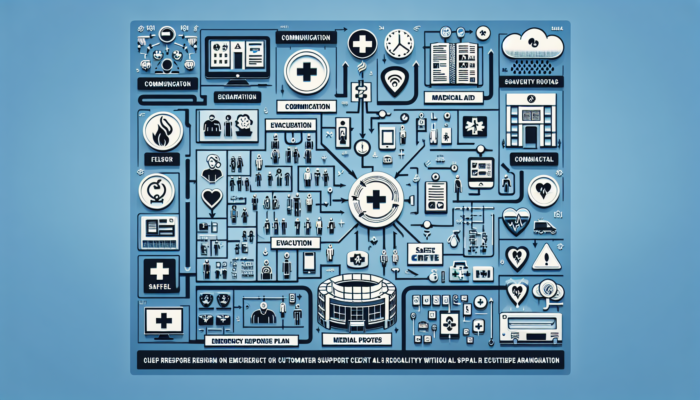
Diagram of emergency response plan for customer support, showing communication, evacuation, medical aid, and safety protocols.

Developing an emergency response management plan tailored specifically to the unique requirements of your organisation is vital. Although the details may differ across industries, the following components are typically essential for effective emergency response in customer support:

1. Conducting Comprehensive Risk Assessment and Analysis

To create a thorough emergency response management plan, it is crucial to first identify potential risks and vulnerabilities that could negatively impact your customer support operations. This analysis should take into account internal factors such as technology failures and staffing shortages, as well as external threats like natural disasters and cyber risks. By conducting a detailed risk assessment, you will be able to evaluate the likelihood and potential impact of each identified risk, thus enabling informed decision-making.

2. Providing Extensive Emergency Preparedness Training

Once potential risks have been identified, it is imperative to ensure that all members of the customer support team receive comprehensive training on emergency protocols and procedures. This training should encompass a wide array of scenarios, equipping employees with the necessary skills to manage emergencies effectively. Regular drills and simulations can further reinforce the training, ensuring that all personnel are thoroughly prepared for any situation that may arise.

3. Crafting an Effective Communication Strategy

A customer support center with screens showing communication protocols and updates via email, SMS, and website during an emergency.

Establishing a clear and efficient communication plan is paramount for a successful emergency response within customer support. This strategy should outline protocols for informing customers about service disruptions, providing timely updates on the situation, and directing them to alternative support options if necessary. Utilising multiple communication channels, such as email, social media, and website notifications, is crucial for effectively reaching customers and ensuring they are kept in the loop.

4. Implementing Redundancy and Backup Systems

Incorporating redundancy measures and backup systems is vital to ensuring that customer support operations can continue seamlessly, even in the event of infrastructure failures or other disruptions. Investing in backup power sources, redundant network connections, and cloud-based customer support platforms can significantly enhance resilience. Regular testing and updates of these systems will ensure they remain effective and reliable, providing peace of mind during emergencies.

5. Encouraging Cross-Training and Strategic Resource Allocation

Promoting cross-training among customer support personnel is essential for enhancing flexibility and responsiveness during emergencies. By broadening individual skill sets, employees can manage various tasks and responsibilities as needed. Furthermore, strategically allocating resources enables the team to effectively address critical areas or high-priority customer inquiries during emergency situations, ensuring that no customer feels neglected.

6. Establishing a Formal Incident Reporting and Analysis Process

A flowchart on a digital screen showing steps of incident reporting and analysis in a modern office.

Creating a formalised process for documenting and analysing incidents that arise during emergencies is indispensable. This practice allows businesses to pinpoint areas that require improvement, assess the effectiveness of their response strategies, and implement necessary adjustments for future incidents. Regularly reviewing and updating the emergency response plan based on these evaluations is crucial for ongoing enhancement and preparedness.

Adopting Best Practices for Superior Emergency Response Management

To bolster the effectiveness of your emergency response management initiatives, consider integrating the following best practices:

  • Conduct Regular Reviews and Updates of the Response Plan: Periodically assess and refine your emergency response plan to reflect advancements in technology, personnel changes, or updates in operational processes. Keeping the plan current ensures that all employees are well-acquainted with the latest protocols and procedures.
  • Fostering Collaboration and Coordination: Encourage robust collaboration between customer support and other organisational departments. Coordinating efforts ensures a cohesive response during emergencies and facilitates the sharing of valuable insights and information, enhancing overall effectiveness.
  • Promoting Ongoing Training and Development: Advocate for continuous training and education for customer support team members. Staying informed about emerging risks, industry trends, and best practices in emergency response management enables businesses to adapt their plans as necessary, ensuring readiness.
  • Building External Partnerships: Forge partnerships or collaborate with external organisations that specialise in emergency response management. Their expertise, resources, and support during crises can significantly enhance your overall response capabilities and effectiveness.
  • Conducting Regular Testing and Drills: Implement routine drills and simulations to evaluate the effectiveness of your emergency response plan. These exercises help to identify potential gaps or weaknesses and provide opportunities for necessary adjustments and improvements.

Recognising the Importance of Emergency Preparedness in Customer Support

In the realm of customer support, maintaining readiness for emergencies is a fundamental aspect of ensuring operational continuity, preserving customer satisfaction, and protecting your business’s reputation. By implementing a comprehensive emergency response management plan that includes risk assessment, training, communication strategies, and redundancy systems, businesses can effectively navigate any crisis and deliver exceptional support to their customers, even during challenging times. It is crucial to remember that preparation is key, and investing in emergency response management equates to investing in the resilience and long-term success of your organisation.

1. Why is emergency response management crucial for customer support?
Emergency response management is essential in customer support because it enables businesses to maintain customer trust, minimise downtime, and prioritise employee safety and well-being. By adequately preparing for emergencies, businesses can instil confidence in their customers, swiftly address inquiries and issues, and ensure the safety of their customer support teams during crises.

2. What are the fundamental components of an emergency response management plan in customer support?
The essential components of an emergency response management plan in customer support include:

  • Risk assessment and analysis to identify potential risks and vulnerabilities
  • Emergency preparedness training to equip customer support teams with the necessary skills
  • Communication plan for informing customers and providing updates
  • Redundancy and backup systems to ensure continuous operations

3. What are the best practices for emergency response management within customer support?
The best practices for emergency response management in customer support include:

  • Regularly reviewing and updating the emergency response plan to ensure its effectiveness
  • Encouraging collaboration and coordination across departments to enhance responses
  • Promoting continuous training and education for customer support teams to keep them informed
  • Establishing partnerships with external organisations for additional support during crises
  • Conducting regular testing and drills to identify potential gaps or weaknesses in the plan

4. Why is continuous training and education essential in emergency response management?
Continuous training and education are critical in emergency response management as they empower customer support teams with updated knowledge about emerging risks, industry trends, and best practices. By remaining informed, businesses can adapt their emergency response plans accordingly, enhancing their overall readiness and response capabilities during unexpected situations.

Originally posted 2023-04-22 09:52:13.

The post Emergency Response Management: Customer Support On Standby appeared first on Healthcare Marketing Service.

Posted on

Inbound Call Centres: Key to Managing Complaints and Escalations

In today’s fast-paced business environment, the importance of providing outstanding customer service cannot be overstated. As customers become more vocal about their needs and expectations, it is essential for organisations to adopt effective strategies that swiftly address complaints and manage escalations. This is where inbound call centers prove their invaluable worth, serving as a crucial resource for effectively managing complaints and handling escalations.

Discovering the Essential Functions of Inbound Call Centers in Customer Service

Inbound call centers are specialised facilities designed to handle incoming calls from customers. They serve as the primary point of contact for individuals seeking assistance, guidance, or resolutions to their concerns. Staffed with trained professionals, these centres are adept at managing a wide range of customer inquiries, complaints, and escalations, ensuring that every interaction is not only effective but also satisfying.

Executing Robust Complaint Management Strategies for Optimal Results

Agents in a modern call center empathetically resolving customer complaints using advanced tools.

One of the primary functions of an inbound call center is to facilitate effective complaint management. When customers face challenges or issues related to a product or service, they need a dependable platform to voice their dissatisfaction and seek resolution. Inbound call centers act as a vital bridge connecting the customer to the organisation, ensuring that complaints are acknowledged and addressed in a timely and efficient manner.

By providing a dedicated complaint management system, inbound call centers offer customers a reliable channel to express their concerns. Skilled customer service representatives are equipped with the necessary tools and resources to manage complaints with professionalism and empathy. They listen attentively to customers, understand their viewpoints, and work diligently to achieve resolutions that enhance the overall customer experience.

Moreover, beyond merely resolving complaints, inbound call centers play a critical role in preventing future issues by identifying the root causes of complaints. By carefully analysing customer feedback, call centre professionals can detect recurring patterns and provide invaluable insights to the organisation. This proactive approach enables businesses to implement necessary enhancements to their products or services, ultimately fostering greater customer satisfaction.

Mastering Effective Escalation Management Techniques for Quick Resolutions

In certain scenarios, customer complaints may necessitate additional attention beyond the initial contact point. This is precisely where escalation management becomes essential. Inbound call centers implement well-defined escalation procedures to ensure that customer issues are directed to the appropriate levels within the organisation when required.

By adhering to established escalation protocols, inbound call centers significantly mitigate the risk of customer complaints being overlooked or mishandled. They maintain effective communication channels with various departments and personnel within the organisation, enabling them to promptly escalate issues that require higher-level intervention. This systematic approach guarantees that customer concerns are resolved quickly and effectively, thereby enhancing overall customer satisfaction.

In addition to escalating complaints, call centre professionals also manage customer expectations throughout the escalation process. They keep customers informed with regular updates, set realistic timelines for resolution, and ensure that customers feel valued and heard during the entire process. This proactive approach to escalation management is vital in maintaining customer satisfaction, even in challenging situations.

Uncovering the Advantages of Inbound Call Centers for Complaints and Escalation Management

Establishing a dedicated inbound call centre for managing complaints and escalations offers numerous benefits to businesses. Let us explore some of the key advantages:

1. Dramatic Improvement in Customer Satisfaction Levels

A call center with agents turning customer complaints into loyalty and growth, symbolizing enhanced satisfaction.

By offering a dedicated platform for resolving complaints, inbound call centers play a pivotal role in dramatically improving customer satisfaction. The prompt and effective handling of complaints reflects the company’s commitment to addressing customer concerns and ensuring their overall satisfaction.

Furthermore, by actively engaging with customer feedback and quickly addressing complaints, call centre professionals can convert dissatisfied customers into loyal brand advocates. This positive word-of-mouth can significantly enhance overall customer satisfaction and contribute to sustainable long-term business growth.

2. Strengthened Brand Reputation through Proficient Management

A company’s brand reputation heavily depends on its ability to manage customer complaints and escalations effectively. Inbound call centers are instrumental in shaping and maintaining a favourable brand image by promptly resolving issues and delivering exceptional customer service.

When customers are assured that their complaints are taken seriously and resolved in a timely manner, they develop trust in the company and its offerings. This trust fortifies the brand’s reputation, leading to increased customer loyalty and fostering a positive perception in the marketplace.

3. Acquiring Valuable Customer Insights for Continuous Business Improvement

Inbound call centers serve as a rich source of customer feedback and insights. By attentively listening to customer complaints and escalations, businesses can gain a deeper understanding of their customers’ pain points, identify recurring issues, and implement necessary enhancements to improve their products or services.

Call centre professionals can collect and analyse data on customer complaints, identifying common themes or trends that arise. This intelligence can then be communicated to relevant departments within the company, such as product development or quality assurance, to drive continuous improvement initiatives. By proactively addressing customer concerns, businesses can maintain competitiveness and deliver products or services that meet customer expectations.

4. Streamlined Complaint Management Processes for Greater Operational Efficiency

Modern call center agents efficiently managing customer complaints with advanced tracking systems, enhancing satisfaction and loyalty.

With a dedicated inbound call center, organisations can optimise their complaint management processes. Trained call centre professionals possess the expertise to handle complaints effectively and have access to advanced complaint tracking systems. This facilitates efficient management, monitoring, and resolution of complaints, thereby alleviating the burden on internal resources.

By centralising complaint management, businesses can ensure that every customer concern is meticulously documented and followed up on. This approach mitigates the risk of complaints slipping through the cracks and provides a clear audit trail for future reference. Streamlined processes also contribute to quicker resolution times, resulting in increased customer satisfaction and loyalty.

5. Achieving Significant Cost Optimisation through Outsourcing

Outsourcing complaint and escalation management to an inbound call centre can lead to substantial cost optimisation for businesses. By leveraging the expertise of call centre professionals, organisations can avoid the need for additional resources, infrastructure, and training expenditures. This allows businesses to focus on their core competencies while ensuring efficient complaint resolution.

Moreover, inbound call centers typically operate on a pay-per-use model, providing businesses with the flexibility to scale their complaint management operations according to demand. This adaptability eliminates the necessity for companies to maintain a large in-house customer service team, leading to considerable cost savings.

Acknowledging the Critical Role of Inbound Call Centers in Customer Service Management

Inbound call centers are essential for managing complaints and escalations, playing a vital role in ensuring customer satisfaction and upholding a positive brand image. With their expertise in complaint resolution, efficient escalation management, and provision of valuable customer insights, these call centers empower companies to address customer concerns promptly and effectively. By outsourcing complaint and escalation management to inbound call centers, businesses can streamline their processes, optimise costs, and significantly enhance overall customer satisfaction.

Note: This revised article is now in markdown format.

Frequently Asked Questions on Inbound Call Centers

1. What is the role of an inbound call center?

An inbound call center serves as the initial point of contact for customers seeking assistance, guidance, or resolutions for their concerns. They manage incoming calls from customers and are staffed with trained professionals capable of effectively handling various types of customer inquiries, complaints, and escalations.

2. How do inbound call centers provide effective complaint management?

Inbound call centers offer customers a dedicated platform to express their concerns and ensure that complaints are addressed promptly and efficiently. Trained customer service representatives actively listen, comprehend the customer’s perspective, and strive for satisfactory resolutions. They also identify the root causes of complaints to help businesses implement necessary improvements.

3. What is the role of inbound call centers in escalation management?

Inbound call centers employ well-defined escalation procedures to ensure that customer issues are escalated to the appropriate levels within the organisation. They mitigate the risk of mishandled or overlooked complaints by establishing communication channels with various departments and individuals. Call centre professionals also manage customer expectations during the escalation process, providing updates and ensuring customers feel valued and heard.

4. What are the benefits of having an inbound call center for complaints and escalation management?

Having a dedicated inbound call center enhances customer satisfaction by providing a specific platform for resolving complaints and actively addressing customer concerns. It improves brand reputation by resolving issues promptly and delivering excellent customer service. Inbound call centers also yield valuable customer insights, streamline complaint management processes, and lead to cost optimisation through leveraging the expertise of call center professionals.

Originally posted 2024-06-16 13:14:27.

The post Inbound Call Centres: Essential for Complaints and Escalation Management appeared first on Healthcare Marketing Service.